Yes, we know: an IT and marketing company building its own premises using a 3D printer – it hardly gets any more clichéd than that. Yet that is exactly what we are doing, and it’s not just for show. We’re building our new headquarters in Weerberg. The load-bearing concrete walls aren’t being constructed using traditional formwork, but layer by layer using a mobile 3D concrete printer – right here on our building site. STRABAG describes the building as currently the tallest 3D-printed building in Austria.
The basement is complete. The walls of the ground floor are currently going up. For us, this is more than just an unusual building shell. It represents a decision to use new technology where it has to work under real-world conditions: here in Tyrol, on an active building site, even in winter.
Why we build this way
We are a Tyrolean company specialising in IT, marketing and sales. The fact that we, of all people, have our company name printed on our stationery therefore almost seems like the obvious cliché. For us, however, the principle is clear: new processes shouldn’t just sound impressive. They need to stand the test of everyday use.
3D concrete printing was something we were absolutely keen to incorporate into this construction project. Our new headquarters should not only be practical, but also symbolise progress. We want to show that new, innovative solutions work just as well. We also want to allay people’s fears. Our own building is the perfect opportunity to do this – and it creates space for new ideas once again.
That is exactly how we want to work in the IT sector for small and medium-sized businesses in Tyrol: technology is not an end in itself. It must be useful in real-world conditions – delivering clear benefits and without making promises that cannot be kept in practice.
What’s happening on our building site at the moment
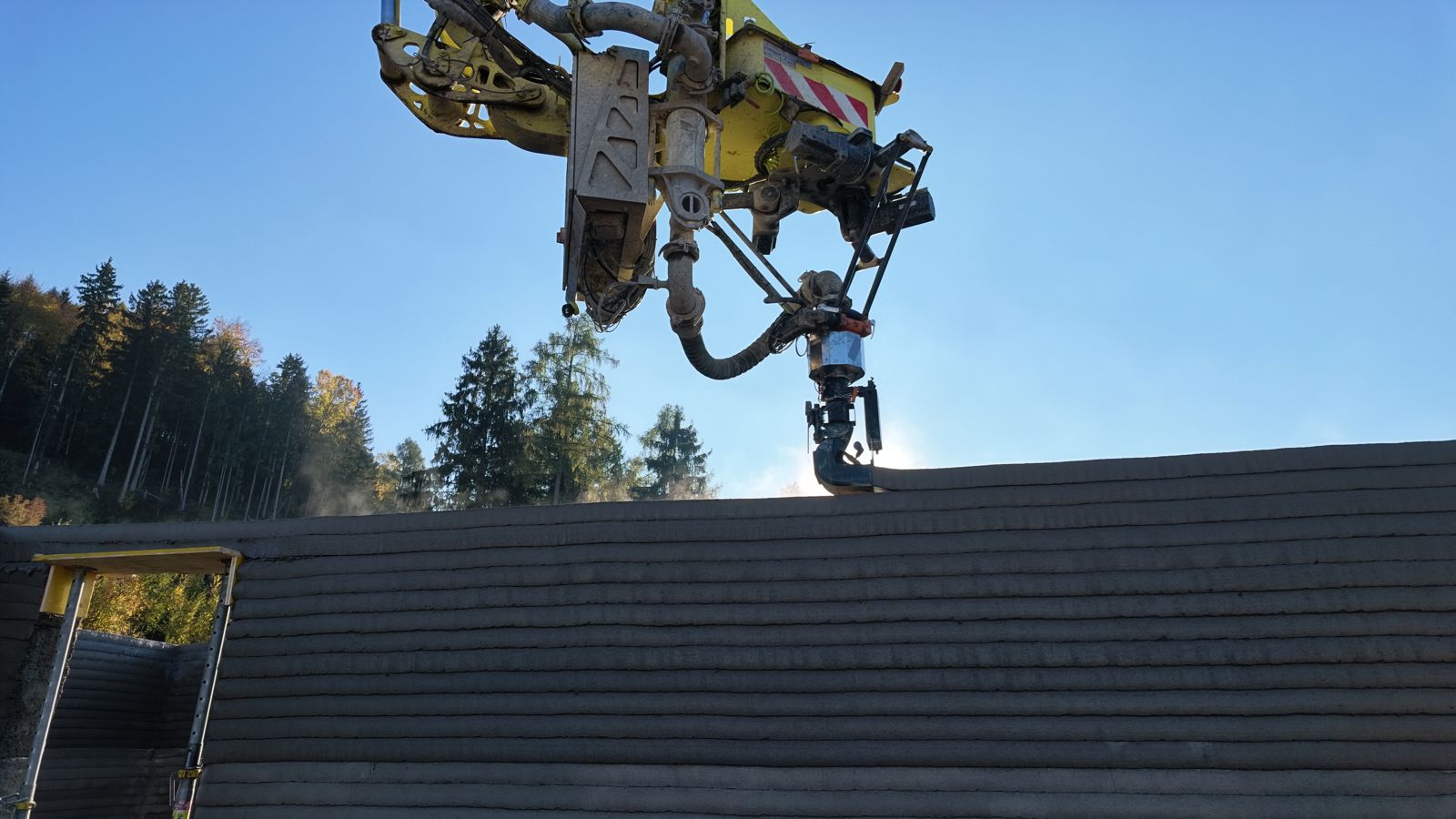
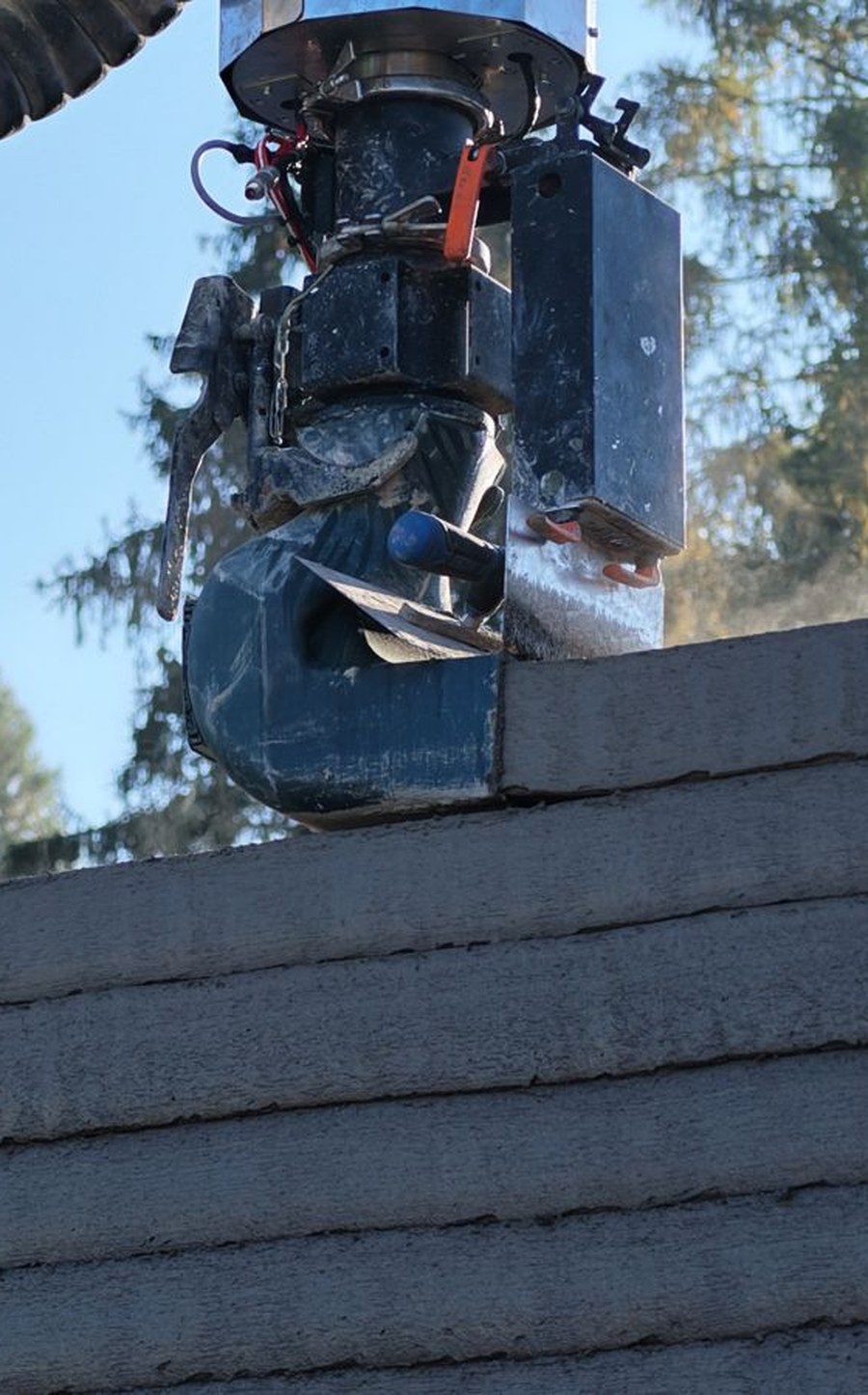
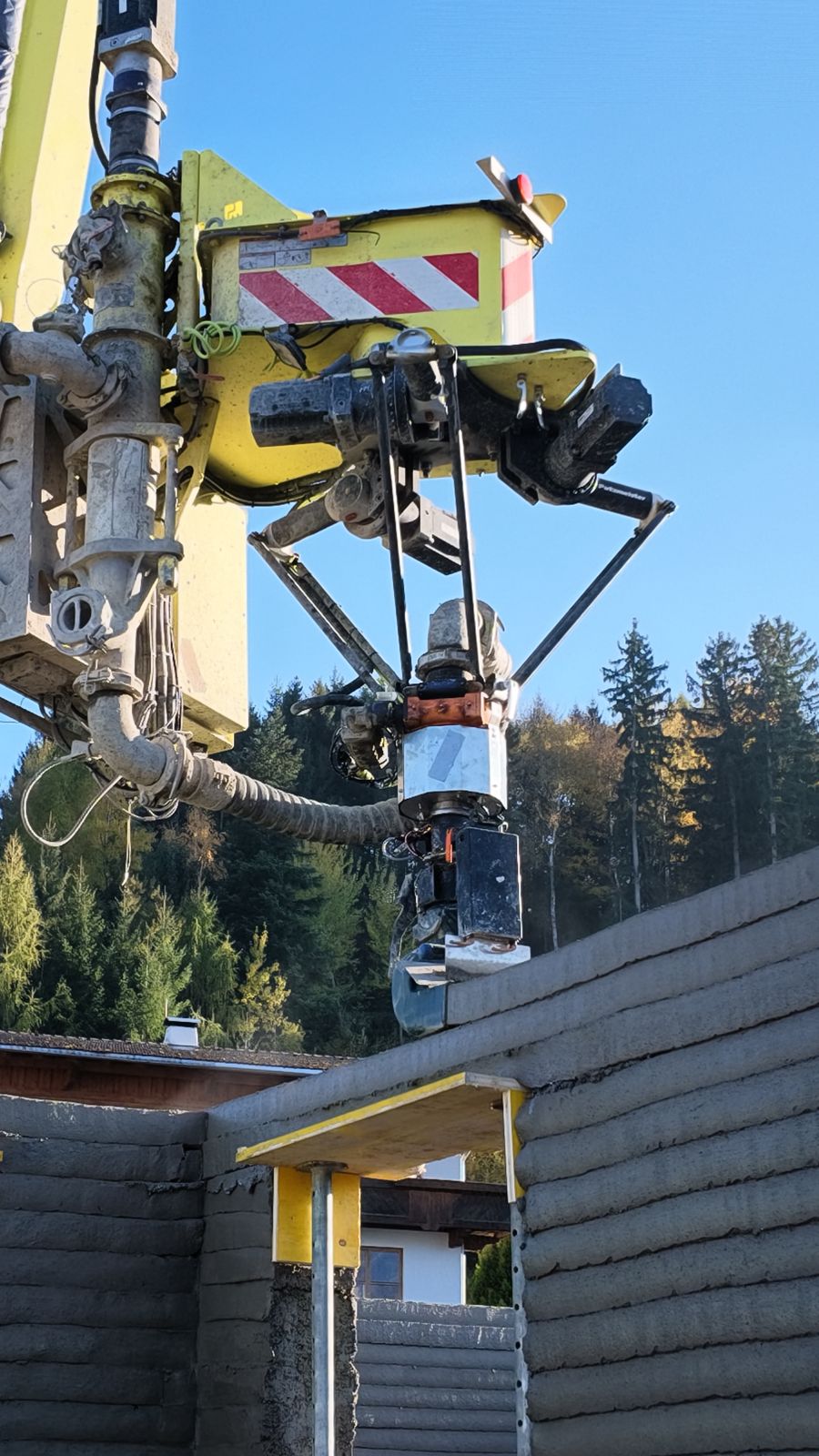
STRABAG is responsible for the structural work. The concrete printing is being carried out by NELCON, a joint venture between STRABAG and the technology provider Instatiq. The mobile 3D concrete printer, Progress One, is on site. Its robotic arm processes concrete from a conventional truck mixer and applies the material layer by layer via a print head. This is how the load-bearing walls are created without the need for conventional formwork. The process is based on a digital building model that already incorporates windows, technical installations and connections for subsequent trades.
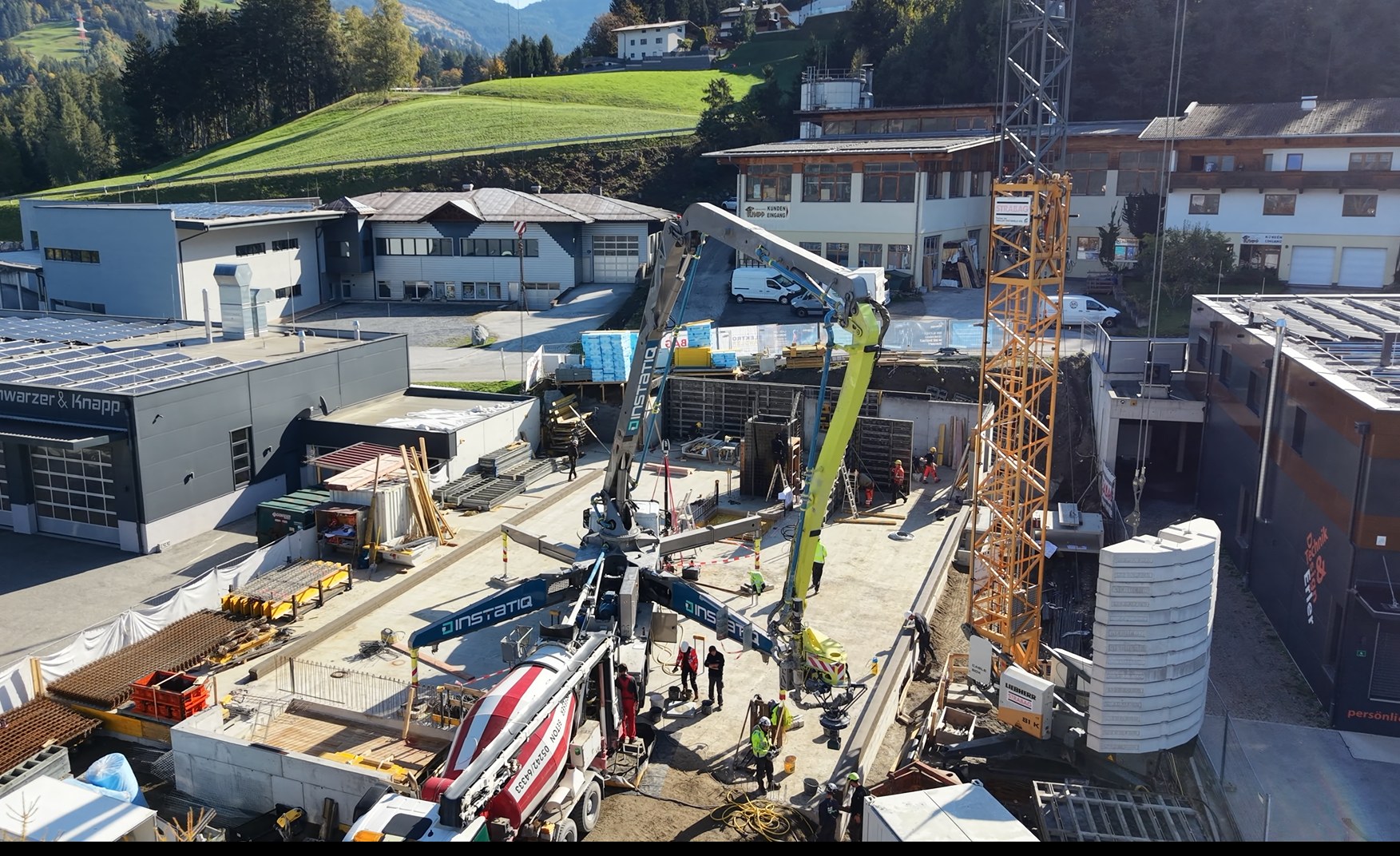
Not the whole house comes out of the printer. Foundations, ceilings and other structural elements are still constructed using conventional methods. The underground car park was built using reinforced concrete, with individual reinforced concrete walls providing structural reinforcement. According to Chris Brandstätt, technical director at NELCON, around 80 to 90 per cent of the walls come from the printer. The printer is repositioned for each level.
The plan is for 18 days of concreting in four phases, covering 682 square metres of wall surface made from around 179 cubic metres of concrete. The concreting work is due to be completed in January 2027, with the entire building due for completion in March 2027. Work has been underway on the building site since September 2026.
Brandstätt comments: „We reconfigure the printer for each level and coordinate our work precisely with the traditional structural work and the subsequent trades.“
What technology can do – and what it does not do automatically
NELCON cites several potential advantages of the process: walls can be constructed twice as quickly as with conventional methods, whilst elsewhere there is talk of a speed-up of up to 100 per cent – which amounts to the same thing in mathematical terms. The number of workers required could be halved, and load-bearing walls could be up to 20 per cent thinner. Depending on the concrete mix, CO₂ savings of up to 40 per cent are possible compared with sand-lime brickwork. The robot handles heavy, repetitive tasks; dust and noise levels on the building site can be reduced. Brandstätt says the costs are on a par with those of brickwork and significantly lower than those of reinforced concrete. The printing is carried out using unreinforced concrete.
These figures have been provided by our project partners. They indicate potential, not an automatic guarantee – not even for our organisation.
We take a realistic view of this. The whole building doesn’t just come out of the printer. The robot has to be set up, the digital plans prepared and the various trades co-ordinated; on top of that, there are structural engineering, fire safety and planning permissions to consider. Particularly with multi-storey buildings, not every step of the process can be automated. A look beyond our own construction site also illustrates this: according to the client, neither the planned timeframe nor the budget was adhered to in the Kraus Group’s pilot project involving three 3D-printed blocks of flats in Heidelberg.
It remains to be seen whether 3D concrete printing will become the norm. So far, it has been used to complement traditional construction methods. The key factor will be whether the promised benefits can be demonstrated beyond individual projects. That is precisely why, in Weerberg, we are not building a showpiece, but a real house under real-world conditions.
Incidentally, our building is not the first 3D-printed building in Austria. In 2021, STRABAG completed a single-storey office extension in Hausleiten covering around 125 square metres. According to Brandstätt, this is the first building that NELCON has 3D-printed in this country.
Building in Tyrol in November
The fact that we are casting in November presents its own challenge. Cast-in-place concrete is more sensitive than formwork-cured concrete because it lacks the formwork to protect it from the cold. Work continues on site during the day at temperatures down to 0 degrees. If the temperature does not fall below minus 5 degrees at night, the freshly cast walls are covered with insulation mats in the evening and secured with mesh. This is supplemented by enclosures and temperature-controlled concrete. This is intended to ensure early strength.
The path to obtaining planning permission was by no means straightforward either. There are no specific standards for 3D-printed buildings; it took four submissions before planning permission was granted. For us, innovation in practice often means coordination – not just a new piece of equipment on the building site.
What we hope to create in our home
Our new building is designed to bring together a variety of uses under one roof: offices and common rooms, storage and workshop areas, a multi-purpose room, a fitness area and leisure facilities. According to the energy performance certificate, the heated gross floor area from the ground floor to the top floor is around 1,700 square metres, plus the underground car park.
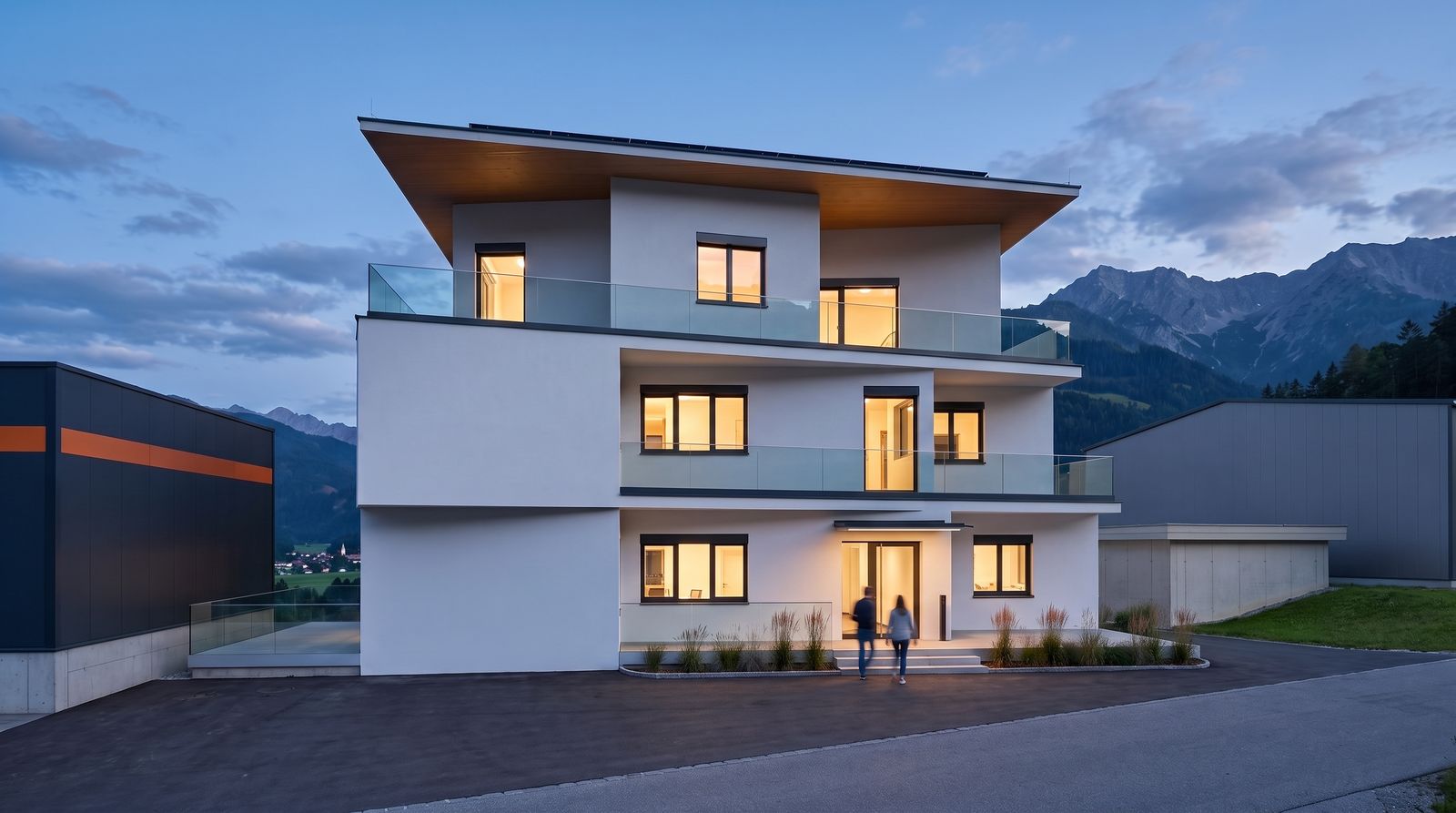
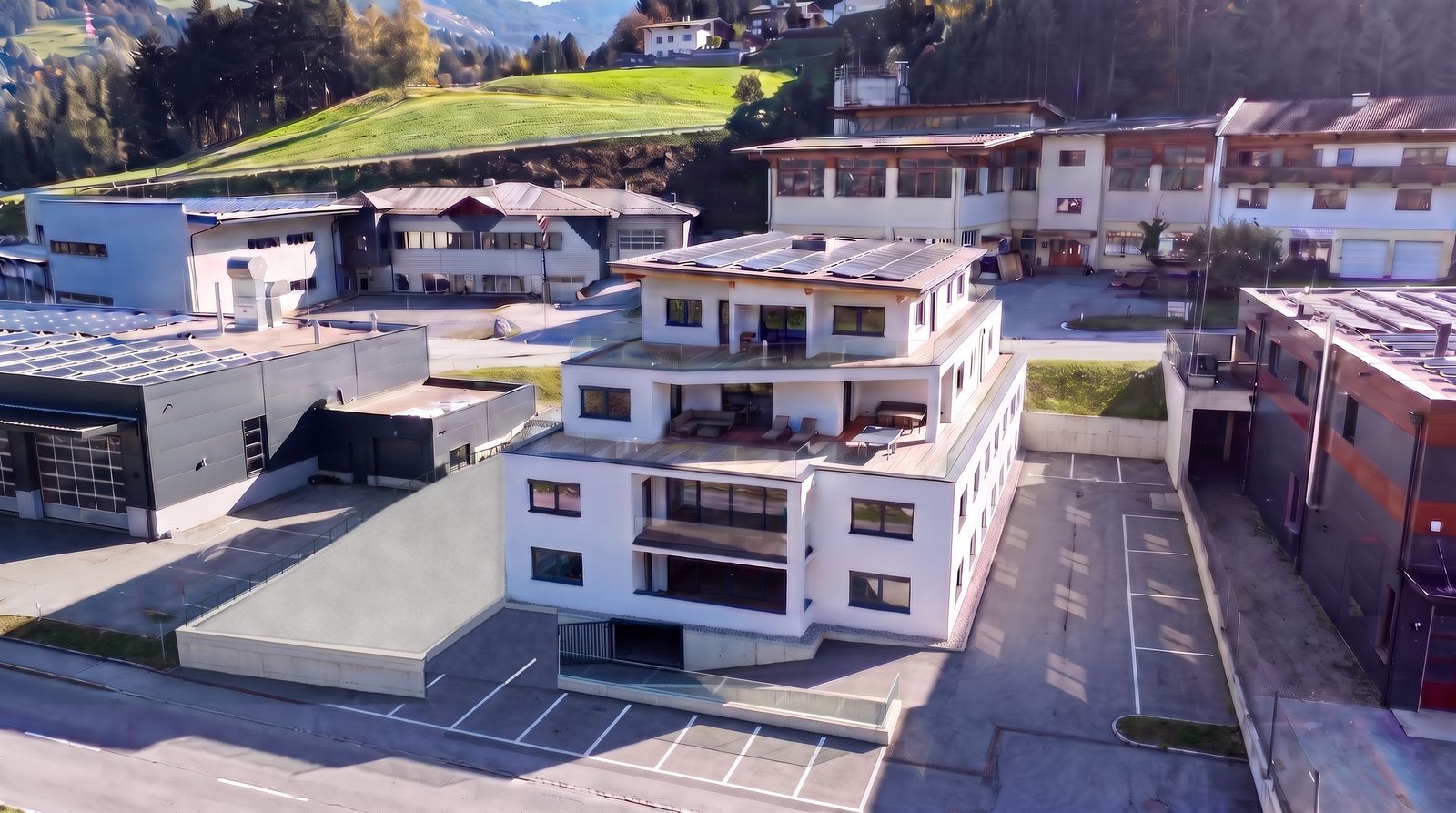
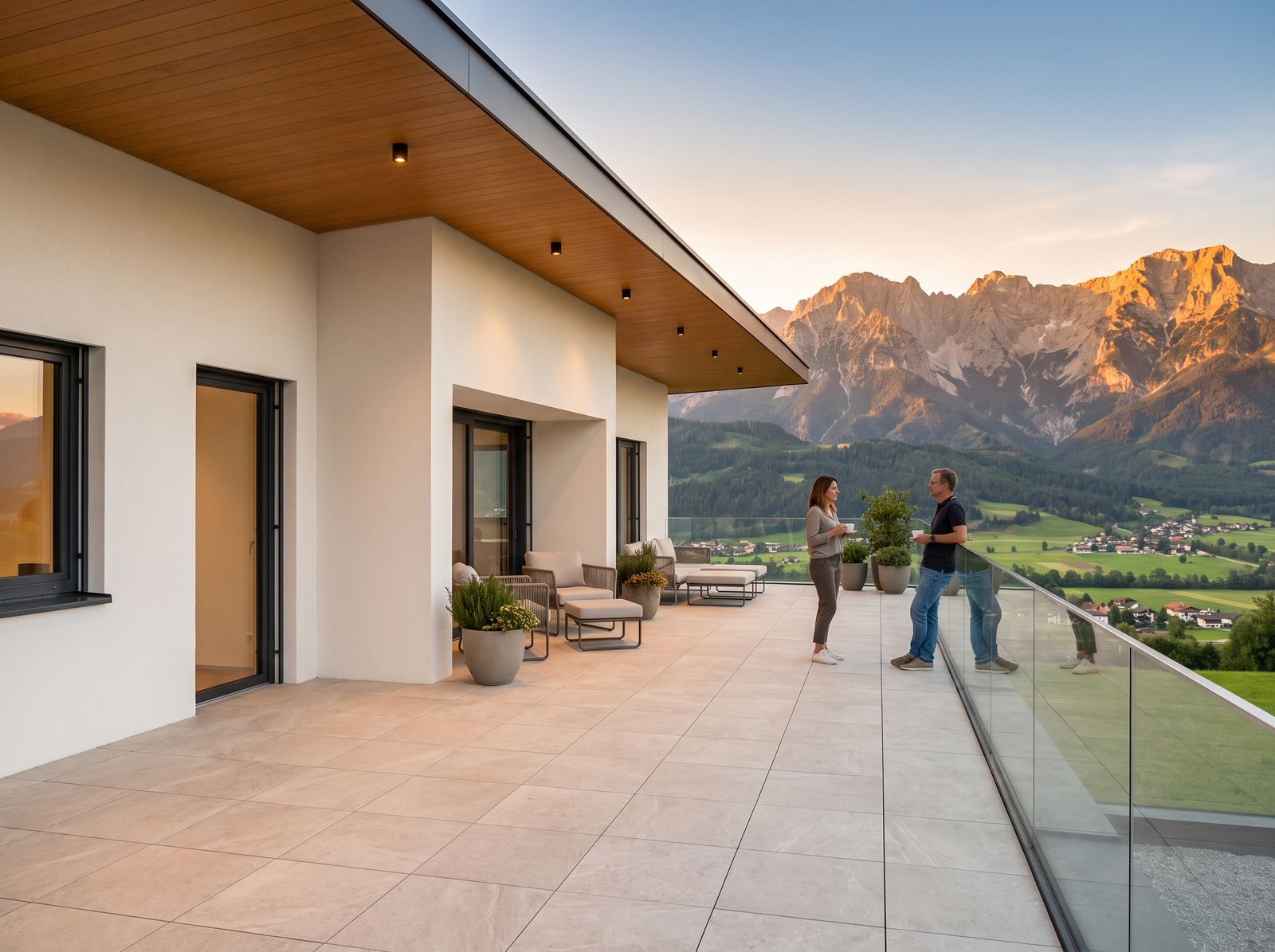
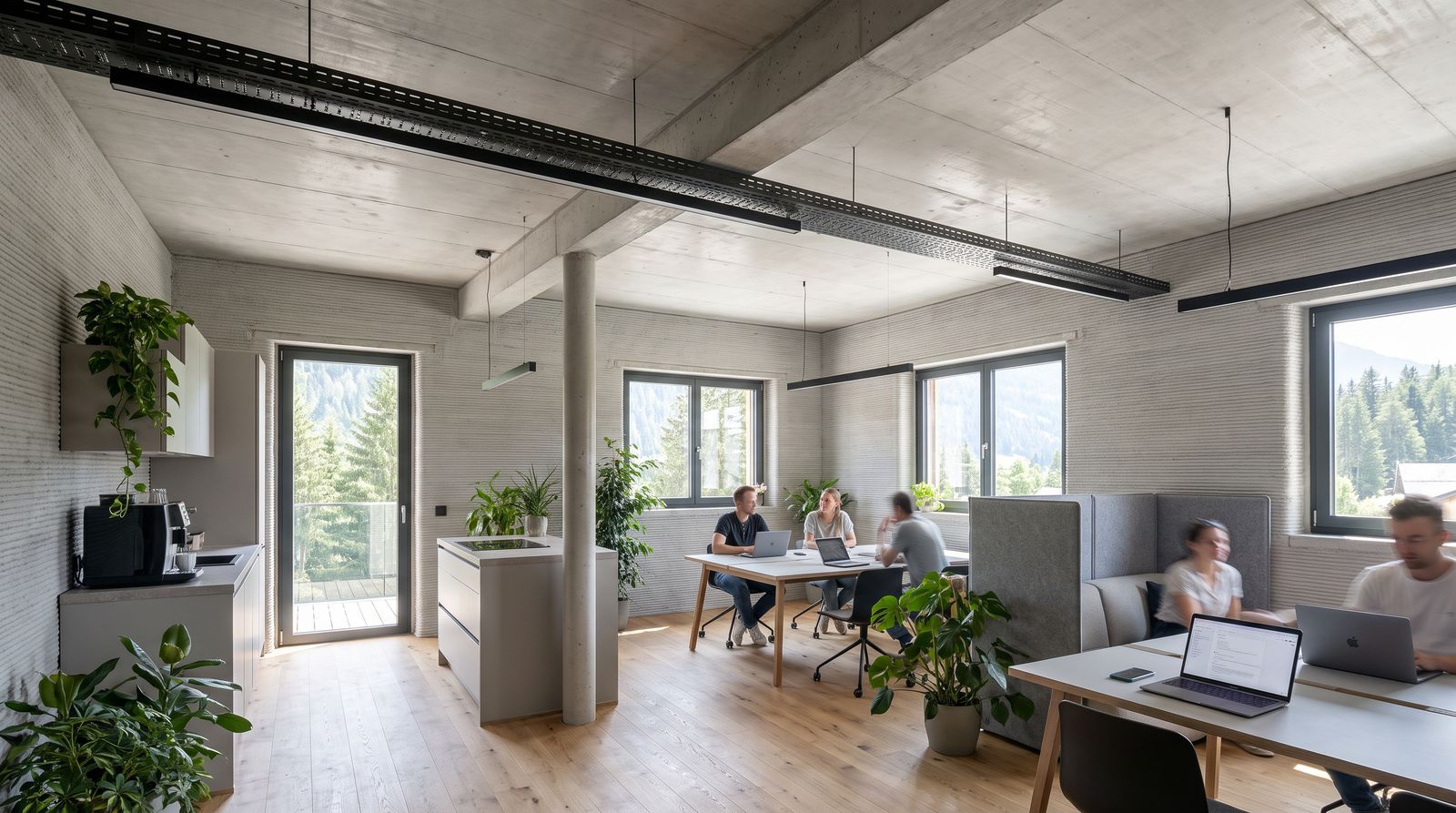
Together with NELCON and STRABAG, we want to demonstrate in Weerberg that innovation and the demands of day-to-day work go hand in hand.
We receive support through the Tyrol regional government’s innovation funding scheme. The Tyrol Business Agency supports us; we are a member of the IT Cluster.
We’ll be testing some building services systems once the structural work is complete – stay tuned. We’ve got plenty planned, but it’s not yet part of our day-to-day operations.
„First you have to create and develop something – then you can perfect it. You have to dare to do something before it’s perfect.“
Christian Machalitzky, NOBUGS Group
On 10 November 2026, the ORF programme „Tirol heute“ also featured a report on our construction project. You can find the programme on ORF ON (available until 10 December 2026).
If you are a business based in Innsbruck, Schwaz, Hall, Wattens, Jenbach or the surrounding area and are looking for IT support that assesses new technology with the same level-headed approach as we apply to our own systems, we are here to help.
Sources
- baublatt: 3D concrete printing: Record-breaking project in Tyrol (12 November 2026)
- entwicklungsstadt.de: Houses printed on a 3D printer – what this new construction technique is really capable of (15 November 2026)
- austria.com: Austria’s tallest 3D-printed building is being constructed in Tyrol (11 November 2026)
- meinbezirk.at: Austria’s tallest 3D-printed building is being built in Tyrol (11 November 2026)
- top.tirol: Weerberg: Nobugs has its concrete headquarters 3D-printed (10 November 2026)
- ORF ON: Report on ‘Tirol heute’ from 10 November 2026
- tirol.ORF.at: An entire house comes out of a concrete printer (10 November 2026)
- STRABAG Newsroom: STRABAG and NELCON are building Austria’s tallest 3D-printed building (11 November 2026)
- Instatiq: Austria’s tallest building printed using a 3D concrete printer (12 November 2026)
- NELCON
- Tirol Business Development Agency: Austria’s tallest 3D-printed building is being constructed in Tirol (11 November 2026)